
Researchers at Moor House Institute are celebrating the publication of two prestigious journal articles. Both papers focus on intervention studies, aimed at boosting vocabulary knowledge and use for students with Developmental Language Disorder (DLD) and wider language disorders.

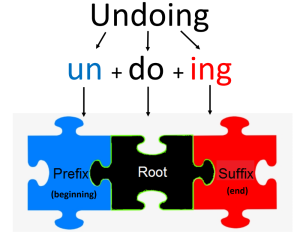
The first paper, (Morphemes matter: A small scale randomised control trial of vocabulary intervention focusing on affixes for adolescents with (developmental) language disorder) is in the International Journal of Speech-Language Pathology, based in Australia. This trial evaluated an intervention that taught teenagers the meanings of common prefixes (e.g., re-, de-, anti-) and suffixes (e.g., -er, -able, –ful). Teaching included direct instruction, example words and sentences, and activities involving speaking, reading, writing and gestures to support learning and memory.
- 25 students, aged between 13 and 15 years, took part.
- 11 received 30-minute sessions working on word parts in pairs twice a week for eight weeks with a speech and language therapist, while 14 continued with their usual support.
- Students completed tests before and after the intervention to measure their understanding of affixes (an umbrella term for prefixes and suffixes) and their ability to work out the meaning of unfamiliar words that include affixes.
- Only half of the affixes were taught so that researchers could assess whether learning transferred to untaught affixes.
The intervention group showed significantly greater progress than the control group on both assessment tasks, but only for taught affixes. Learning transferred to new words containing those affixes, but not to affixes that had not been explicitly taught. Teaching affixes appears to be an efficient way to improve vocabulary knowledge, even with a relatively small amount of intervention.
Our second paper, (Investigating the effects of adding explicit teaching and/or signing to story-based vocabulary intervention for school-aged children with (developmental) language disorder) is published in the International Journal of Language & Communication Disorders, based in the UK. This study compared the effects of adding explicit teaching and/or signing to a story-based vocabulary intervention.
- 18 participants, aged between 7 and 15 years, took part, receiving one-to-one therapy twice a week for eight weeks.
- Our results indicate that adding explicit teaching and/or signing can lead to greater improvements in learning new verbs and adjectives than repeated exposure to target words, embedded in a story context.
- Combining explicit teaching and signing does not appear to lead to additional benefit.
These findings have important clinical implications, suggesting that SLTs and school staff working with children with (D)LD should prioritise using either signing or explicit teaching strategies whenever possible to support vocabulary development. Signing may be quicker to implement as this can be delivered alongside speech. The approach chosen should be based on what works best for the child and the skills and preferences of the staff.


Building on the outcomes of these two studies, members of our team continue to develop new ways to support students’ vocabulary knowledge and improve their access to the curriculum. One promising avenue is using findings from our first study (on affixes) to inform a class-based intervention focusing on Maths vocabulary. We also have a further project in the pipeline exploring the language of Maths more broadly and the barriers to understanding exam questions. And we will soon be submitting a new paper, which extends our affixes intervention to a wider range of students, including younger children in Key Stage 2.
Through this ongoing programme of research, we aim to identify effective, evidence-based approaches that help more students with language needs develop their vocabulary and achieve their full potential in school and beyond.
You can read the full articles on the links above, or to find out more about research carried out by Moor House Institute, click here.